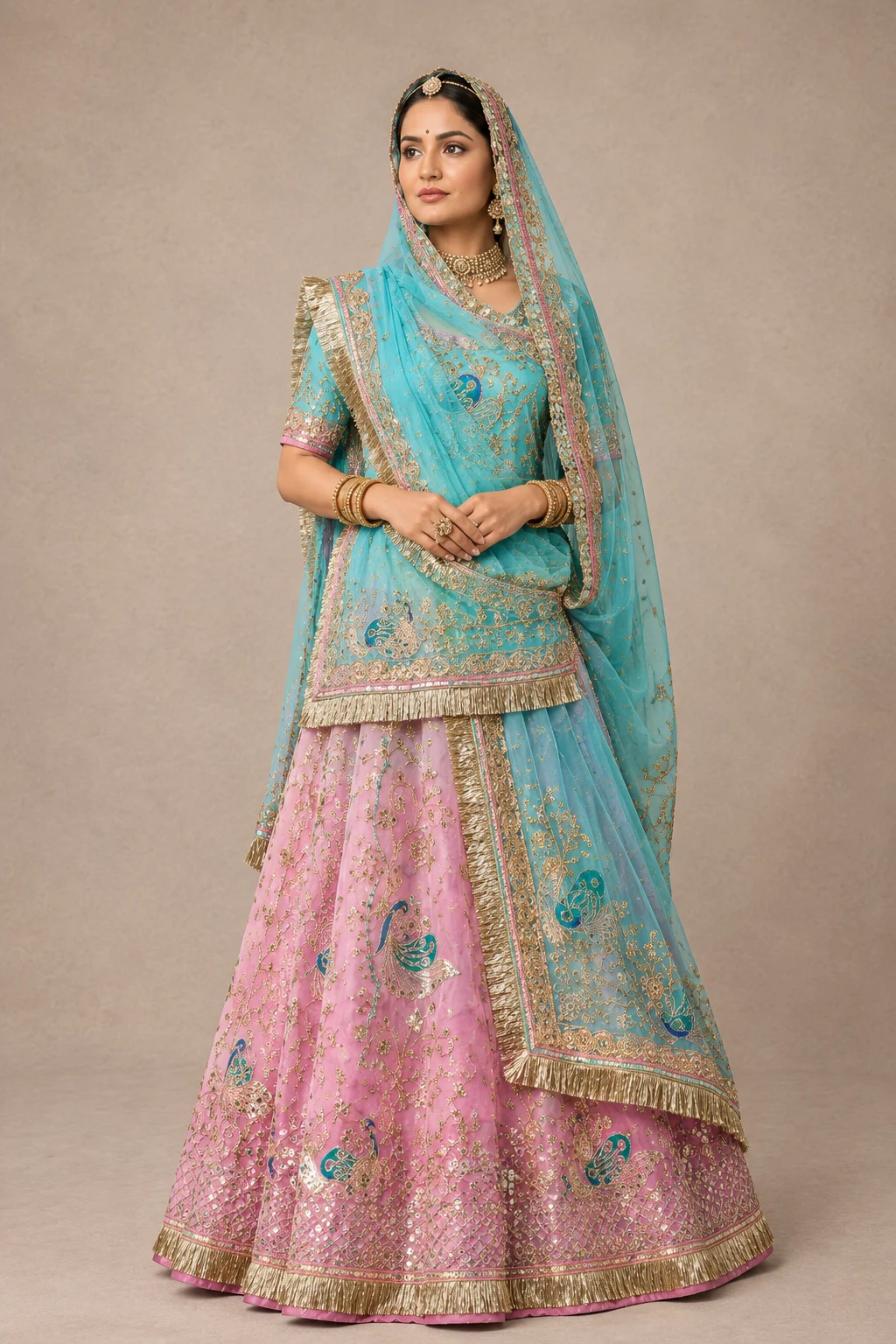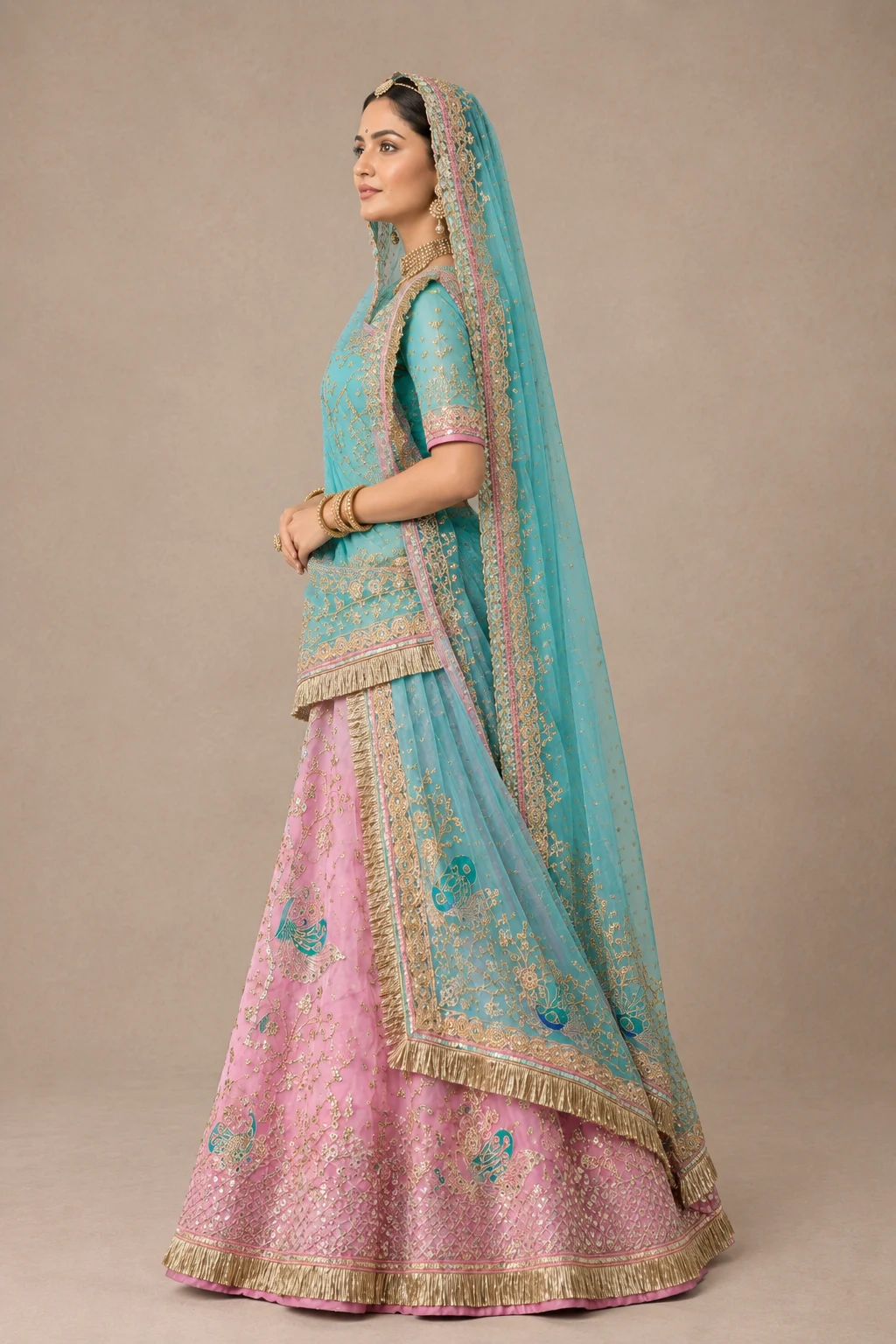
Bridal vs Festive Rajputi Poshak: Key Differences & How to Choose
Notice for Site Owner:
This article is drafted for SEO topical authority and customer guidance. Please review the details (pricing estimates, showroom timings, or rental terms) and edit as appropriate for your Nagpur store policies.
Understanding the Royal Distinctions
While both bridal and festive ensembles belong to the noble Rajputana poshak tradition, they serve distinctly different ceremonial purposes. Selecting the right category ensures you feel radiant, regal, and physically comfortable throughout long Indian ceremonies.
Below is an authoritative comparison between a bridal poshak and a festive poshak handcrafted at Rajwadi's Nagpur boutique.
1. Fabric & Structural Weight
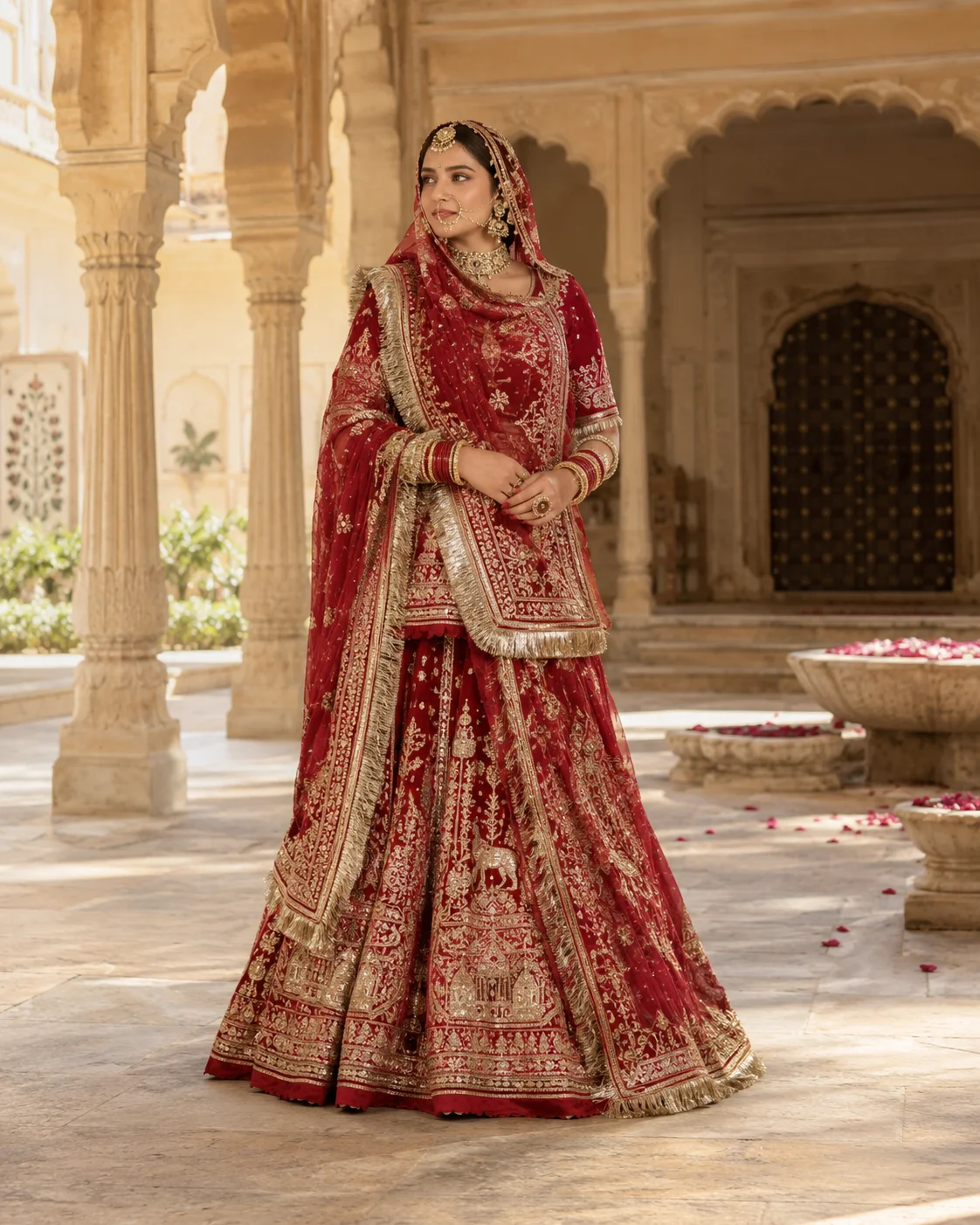
Bridal Poshak: Fashioned from heavy pure handloom georgette, tissue silk, or royal brocades. Because of the density of gold wire and metal plates, a finished bridal poshak weighs between 3.5 kg and 6.0 kg, providing a firm, regal drape that stays poised during rituals.
Festive Poshak: Tailored from lighter pure georgette, chiffon, or fine art silk. Weighing between 1.2 kg and 2.5 kg, festive poshaks prioritize fluid grace, breathability, and ease of dancing or day-long fasting rituals.
2. Embroidery & Karigari Techniques
Bridal Artistry: Features dense, three-dimensional Zardozi wirework, antique Kasab metallic thread, heavy Danka (hand-cut convex metallic plates), and elaborate 4-sided Odhna borders with prominent Gota Kiran fringe.
Festive Artistry: Emphasizes flat and folded Gota Patti florets, delicate Marodi needlework, Kundan stone buttas, and light Barik Zari outlines. The result is shimmering brilliance without the bulk of heavy metallic wire.
3. Kalidar Ghagra Gher (Flare Sweep)
Bridal Ghagra: Meticulously cut into 12 to 16 full kalis with an expansive sweep ranging from 4.5 meters to 6.5 meters. This dramatic flare pools regally when seated during the marriage vows.
Festive Ghagra: Typically cut with 8 to 12 kalis offering a graceful 3.5 to 4.2-meter gher, designed for natural movement and effortless walking.
4. When to Choose Which?
Choose Bridal: If you are the bride, the bride's mother at the main ceremony, or the groom's sister during the Mayra and Barat procession where maximum royal formality is expected.
Choose Festive: If you are attending Teej, Gangaur, Karwa Chauth, Diwali, family ring ceremonies, or pre-wedding sangeet parties where lively interaction and dancing are key.