How to Wear a Rajputi Poshak: Step-by-Step Traditional Draping Guide
Notice for Site Owner:
This article is drafted for SEO topical authority and customer guidance. Please review the details (pricing estimates, showroom timings, or rental terms) and edit as appropriate for your Nagpur store policies.
The Elegance of the Rajputana Silhouette
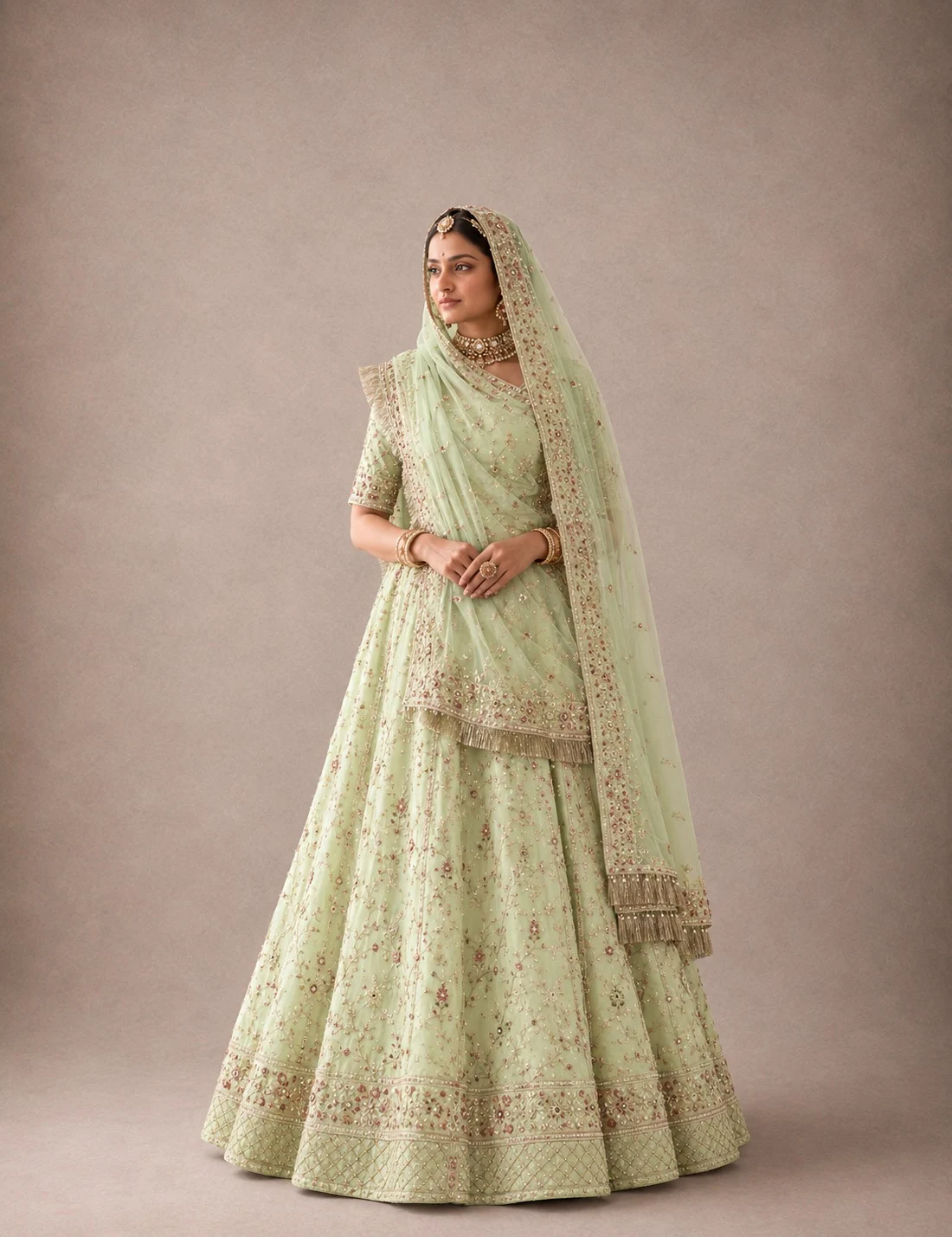
The Rajputi Poshak is revered as one of the world's most dignified traditional ensembles. Worn across generations by royal dynasties in Mewar, Marwar, and Shekhawati, its silhouette reflects noble poise, modesty, and courtly dignity.
For first-time wearers, assembling the four distinct garments can appear complex. Follow our comprehensive guide from Rajwadi Nagpur to achieve an immaculate royal drape.
Step 1: The Inner Foundation & Kalidar Ghagra
Begin with a well-fitted cotton petticoat tied firmly at the natural waist. Step into the Kalidar Ghagra and align the waist drawstring (nada). Ensure the ghagra hem sits exactly half an inch above the floor when wearing your ceremonial heels.
Smooth the pleats around your waist so the flared kalis distribute symmetrically. The satin or zari Aari-Magji border along the bottom hem should form an even, circular perimeter.
Step 2: Wearing the Kanchali (Inner Bodice)
The Kanchali is the fitted inner brassiere-blouse with back tie cords (dori). Slip your arms through the sleeves and position the cups securely over your chest. Tie the cords firmly in the back.
Because the Kanchali is open-backed, ensure the fit around the arms and chest is snug yet comfortable, allowing freedom of arm movement.
Step 3: Slipping on the Kurti (Outer Tunic)
The Kurti is the sleeveless or short-capped outer tunic that slips over the head, covering the Kanchali and falling over the upper portion of the ghagra.
Align the side slits (chaks) evenly over your hips. A properly tailored Kurti should hang straight without pulling across the bust, highlighting the fine gota and zari embroidery along the deep U-neckline.
Step 4: The Crowning Odhna Drape
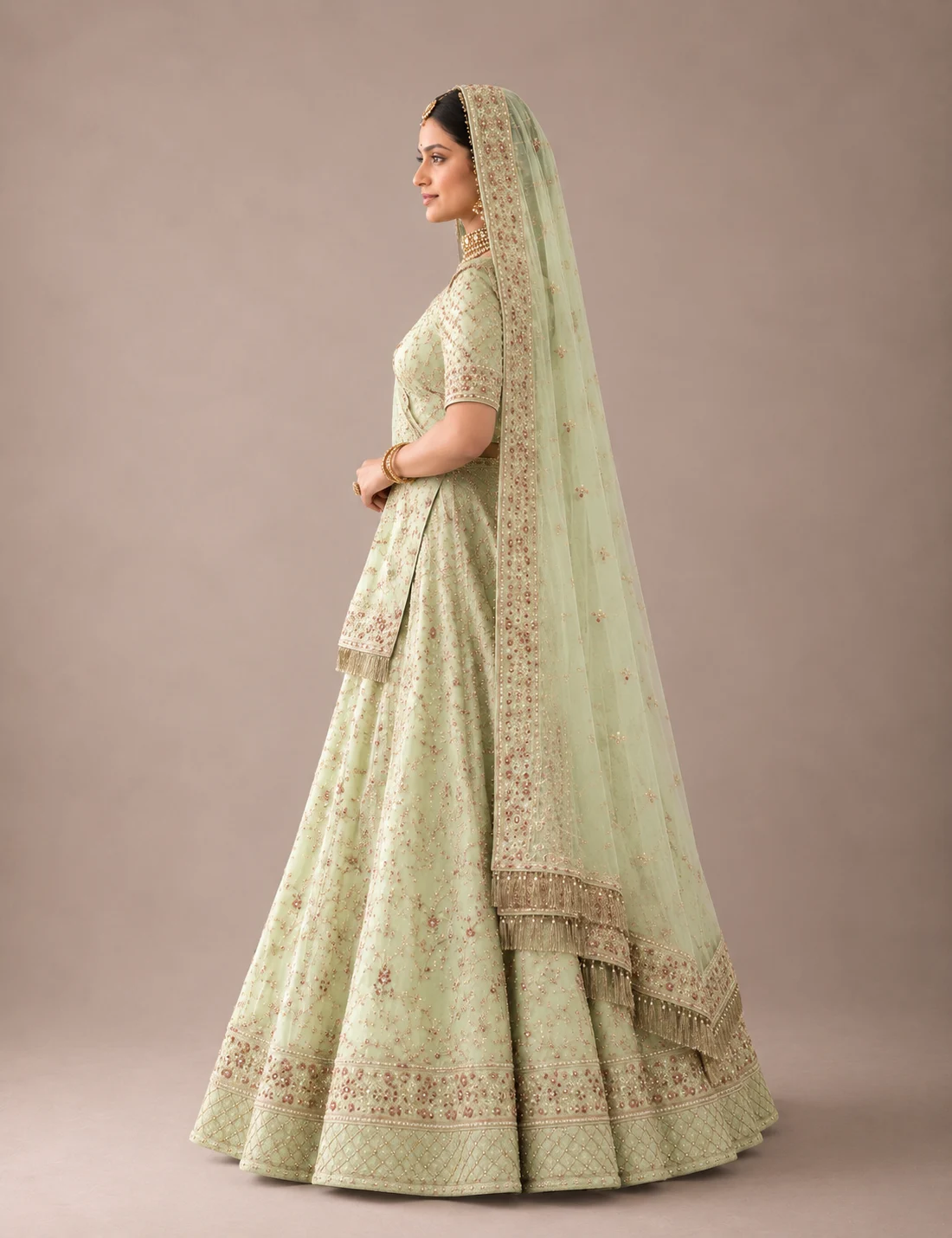
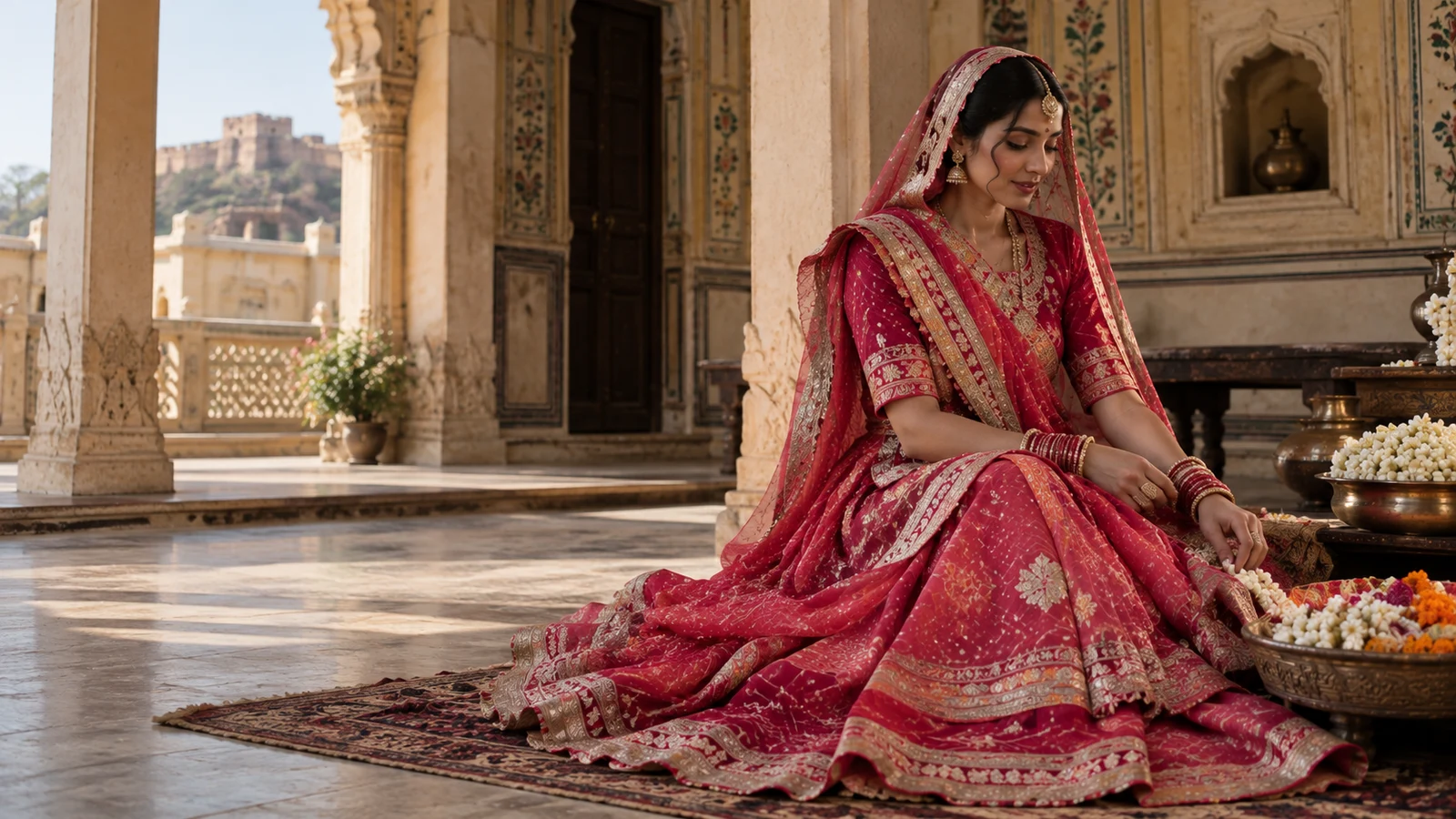
The 2.5-meter Odhna is the defining crown of the poshak. There are two traditional draping styles: the Royal Court Palla and the Front Marwadi Drape.
1. Take one end of the Odhna and tuck it securely into the right side of the ghagra waist.
2. Bring the fabric across the back, over the left shoulder, and let the decorative palla hang elegantly across the arm.
3. Take the remaining length over your head from the back, securing it with subtle bobby pins into your hair bun so the gota kiran fringe frames your forehead.
- Pin Placement: Use velvet-padded safety pins underneath the border so metal does not snag pure georgette threads.
- Kiran Direction: The delicate gota kiran should point outward, glistening softly against the face.
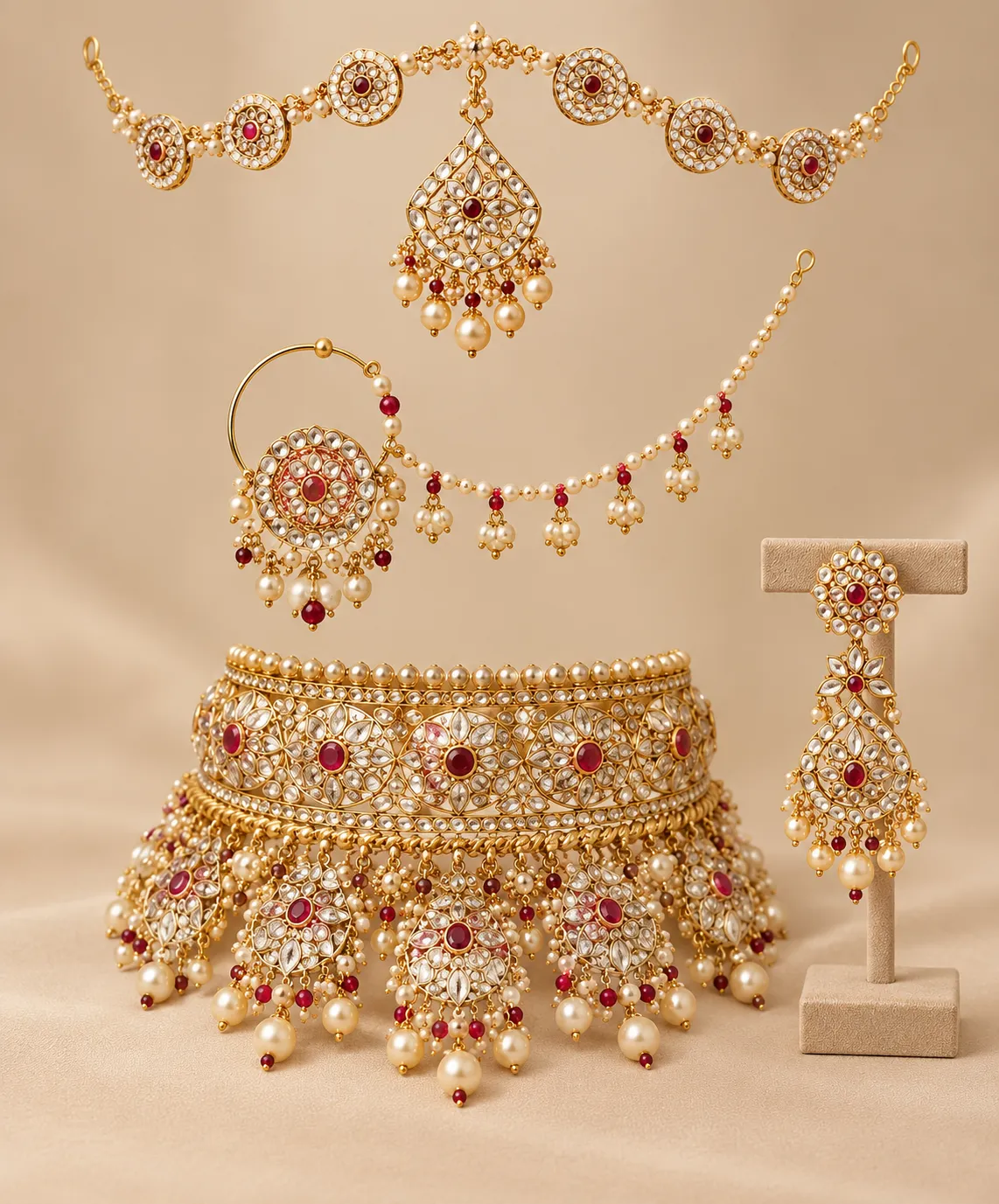
Step 5: Pairing Rajputi Royal Jewellery
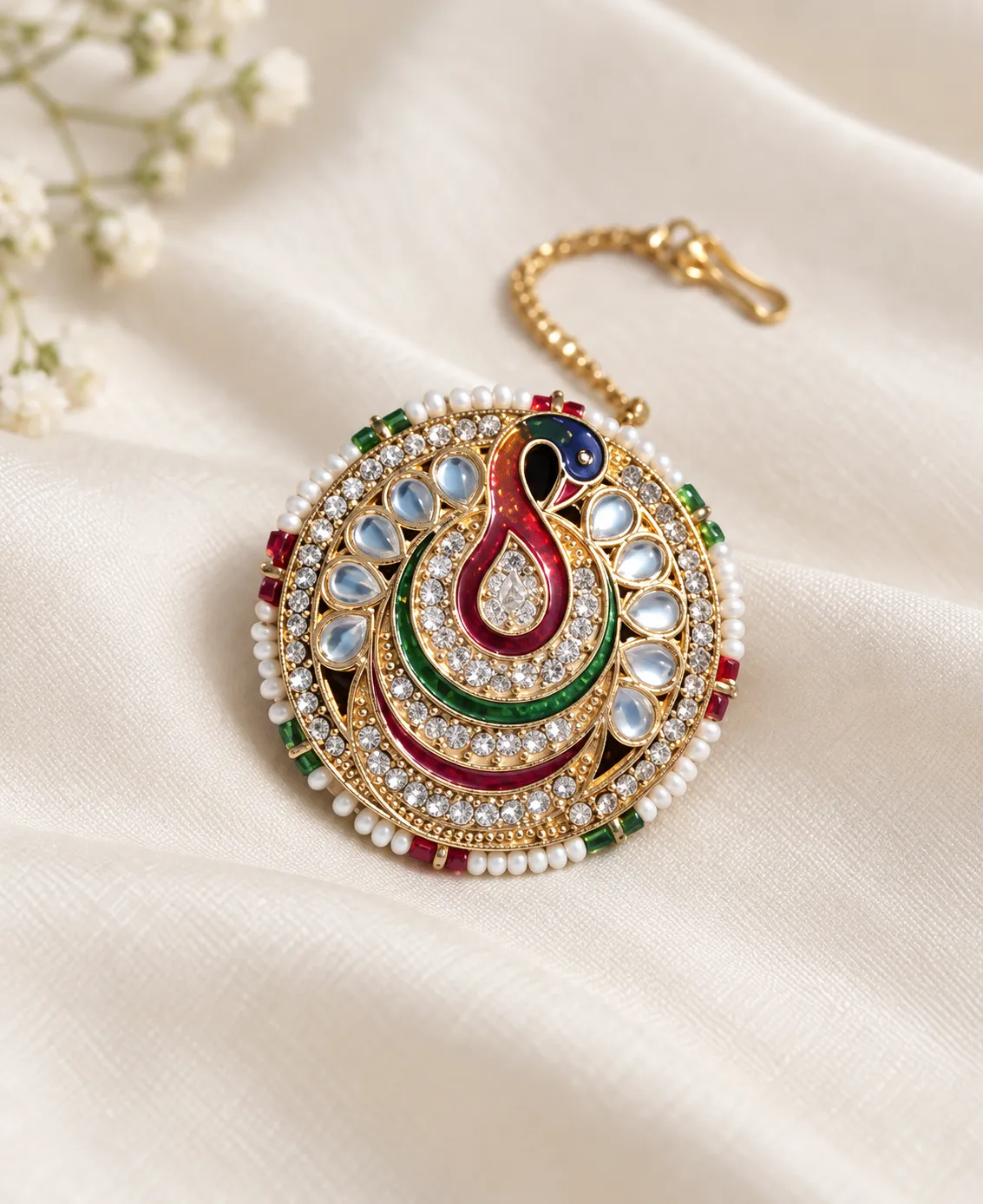
Complete the attire with traditional Rajputi jewellery: the circular Borla at the hair parting, the crescent Aad necklace nestled against the collarbone, and the delicate Nath with pearl chain pinned into the hair. You are now adorned in authentic royal splendour.